
A broad stakeholder discussion on collaborating for research in the WASH sector
WASH
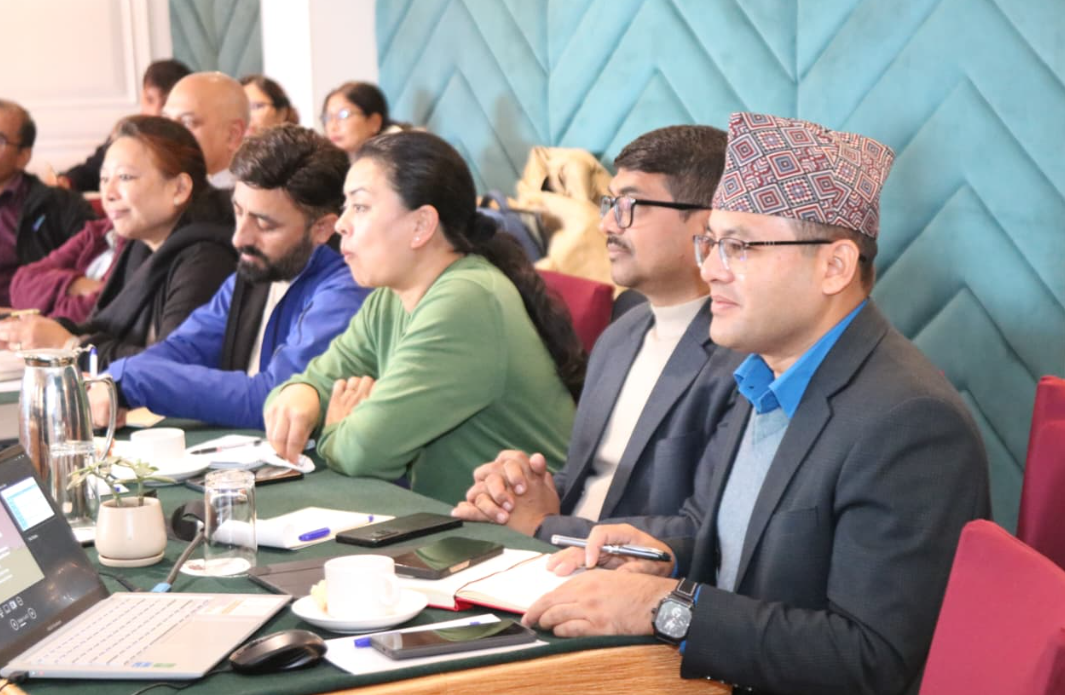
Kathmandu: A comprehensive discussion has been held among stakeholders on possible areas of collaboration for conducting studies and research in the water supply, sanitation, and hygiene sector. This is the first extensive dialogue with stakeholders specifically focused on research and study in the water supply and sanitation sector. Although the need for research in this sector had been highlighted previously, there had been no formal discussions.
With the participation of UN agencies, development partners, academic and technical institutions, civil society organizations, networks, and water and sanitation experts, the National Water Supply and Sanitation, Research, Innovation and Capacity Development Centre under the Ministry of Water Supply, with support from Welt Hunger Hilfe (WHH), conducted the first-ever discussion on research collaboration in the WASH sector. Welcoming the participants, WHH’s WASH expert Biju Dangol shared that studies are ongoing on groundwater levels in the Terai-Madhesh region and on spring water conditions in the hilly regions.
According to Executive Director Er. Ram Kumar Shrestha, the discussion was organized with the objective of utilizing available resources for evidence-based and implementation-focused research and innovation, and to enhance research capacity through collaboration with development partners as per the Centre’s expanded mandate.
He added, “The discussion has been conducted to identify research areas and financial opportunities, and to explore potential areas of collaboration with development partners in line with the Centre’s expanded mandate.” During the interaction, development partners shared the research areas their respective organizations are currently working on and expressed views on how research-oriented cooperation could be fostered among research entities.
Representatives from Kathmandu University and other academic institutions mentioned that various research activities related to water supply and sanitation are already underway, and that collaboration with development partners would further strengthen and broaden the scope of research. Participants also emphasized identifying specific research themes and issuing a call for interested researchers. They expressed readiness to provide financial support for such initiatives.
Concluding the event, Executive Director Er. Ram Kumar Shrestha stated that this first discussion on potential research collaboration was highly productive. He further committed to preparing a document summarizing all the key points raised during the discussion, sharing it with all stakeholders, and then organizing a second round of discussions to develop a concrete action plan. “Although the research center has a designated budget for research, it is extremely limited. Collaboration between the government and development partners will be instrumental in giving concrete shape to research initiatives,” he said.
Participants included representatives from the Ministry of Water Supply; Department of Water Supply and Sewerage Management; academic institutions such as Kathmandu University, Pulchowk Engineering Campus, and Thapathali Campus; UN agencies including UN-Habitat, WHO, and UNICEF; development partners such as WaterAid, SNV, WHH, the Embassy of Finland, JICA, ICIMOD, IWMI, ENPHO, Oxfam, and the British Embassy; capacity development institutions such as the Council for Technical Education and Vocational Training (TITI) Bhaktapur, Local Development Training Academy (LDTA) Jawalakhel, and Nepal Administrative Staff College (NASC) Jawalakhel; and network organizations including the Citywide Inclusive Sanitation Alliance, Municipal Association of Nepal, National Association of Rural Municipalities in Nepal, Federation of Drinking Water and Sanitation Users Nepal (FEDWASUN), and the Small Town Water Supply and Sanitation Users Federation, along with various water and sanitation experts.